
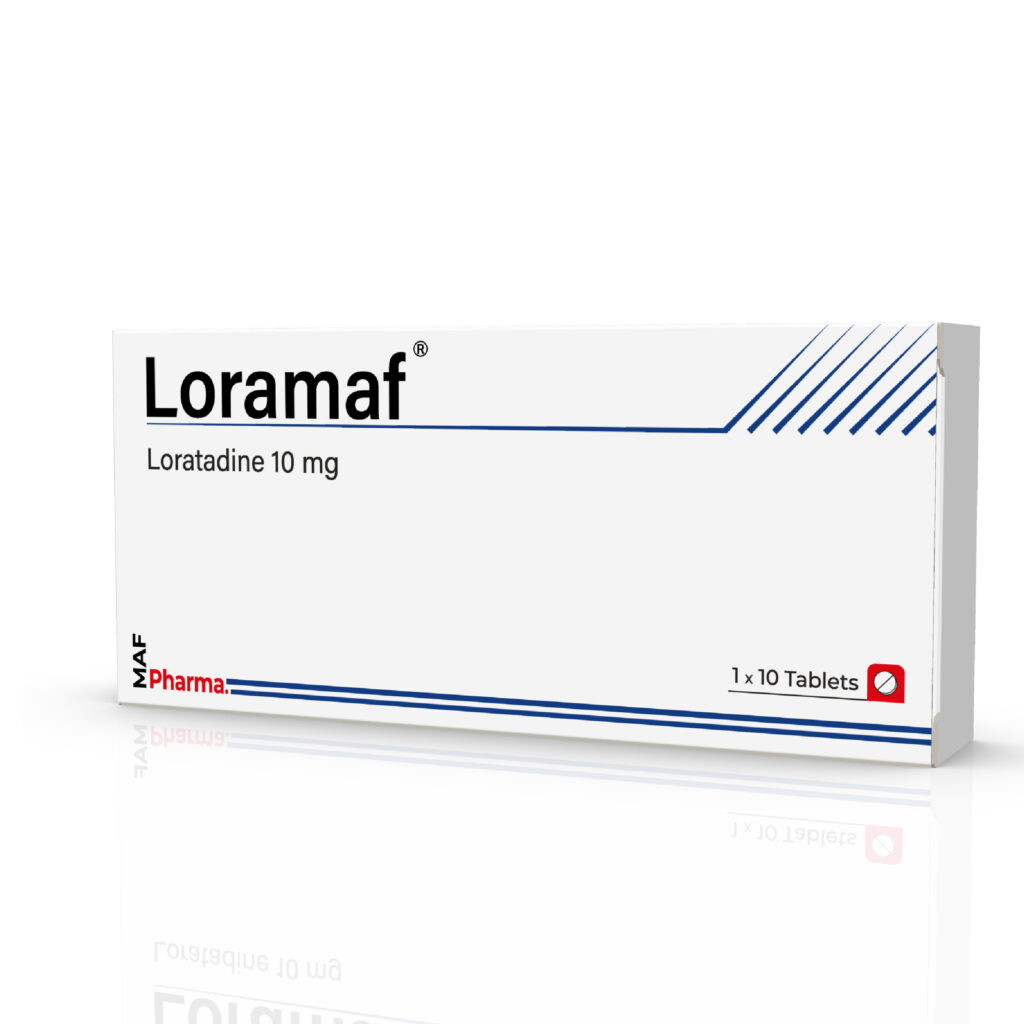
LORAMAF TABLETS
Each uncoated Loramaf tablet contains:
Loratadine …………………………….. 10 mg
LORAMAF FILM COATED TABLETS 10MG (LORATADINE 10MG)
Composition:
Uncoated Tablets:
Each uncoated Loramaf tablet contains:
Loratadine …………………………….. 10 mg
What is Loramaf?
Loramaf contains the active ingredient loratadine, which belongs to a class of medications called antihistamines.
How does Loramaf work?
Loramaf helps reduce your allergy symptoms by blocking the effects of a substance called histamine, which is produced in the body when you have an allergy.
When should you take Loramaf?
Loramaf relieves the symptoms of allergic rhinitis (e.g., hay fever), such as sneezing, a runny or itchy nose, and burning or itchy eyes. Loramaf can also be used to help relieve the symptoms of urticaria (hives). Loramaf will last for a full day and help you continue your normal daily activities and sleep. You should talk to a doctor if you do not feel better or if your condition worsens.
What do you need to know before taking Loramaf?
Do not take Loramaf if you are allergic to loratadine or any of the other ingredients in this medicine.
Warnings and precautions:
Talk to your doctor, pharmacist, or nurse before taking Loramaf if:
– You have liver disease. If you are scheduled to have any skin tests for allergies, do not take Loramaf for two days beforehand, as it may affect the test results.
If any of the above applies to you, or if you are unsure whether it applies to you, talk to your doctor or pharmacist before taking Loramaf.
Taking Loramaf with other medicines:
The side effects of Loramaf may be increased when used with medicines that alter the action of certain enzymes responsible for metabolizing the drug in the liver. However, in clinical studies, no increase in the side effects of loratadine was observed with products that altered the action of these enzymes. Please inform your doctor or pharmacist if you are taking or have recently taken any other medicines, including those obtained without a prescription.
Pregnancy and breastfeeding:
If you are pregnant, think you may be pregnant, or are planning to have a baby, ask your doctor or pharmacist for advice before taking this medicine.
As a precaution, it is best to avoid using Loramaf during pregnancy. Do not take Loramaf if you are breastfeeding. Loratadine passes into breast milk.
Driving and using machines:
In clinical trials that assessed the ability to drive, no impairment was observed in patients receiving loratadine.
When taken at the recommended doses, Loramaf is not expected to cause drowsiness or reduced attention. However, very rarely, some people may experience drowsiness, which may affect their ability to drive or use machines.
How to take Loramaf:
Always take this medicine exactly as shown in this leaflet or as your doctor or pharmacist has told you. Please check with your doctor if you are not sure how to take it.
Loramaf tablets dosage:
Adults and children aged 6 years and over weighing more than 30 kg: Take one tablet once a day with a glass of water, with or without food. If you weigh 30 kg or less:
Do not give Loramaf tablets. There are other formulations (syrup) that are more suitable for children under 6 years old or weighing 30 kg or less.
Children under 2 years of age:
Loramaf tablets are not recommended for children under 2 years of age.
Adults and children with severe liver problems:
Adults and children weighing over 30 kg:
Take one tablet once every two days with a glass of water, with or without food. However, talk to your doctor, pharmacist, or nurse before taking this medicine.
Loramaf syrup dosage:
Children 2-5 years:
5 ml of syrup once daily.
Children 6-12 years:
10 ml of syrup once daily.
If you take more Loramaf than you should:
If you take more Loramaf than you should, talk to your doctor, pharmacist, or nurse immediately. Serious problems are not expected; however, you may experience headache, rapid heartbeat, or drowsiness.
If you miss a dose of Loramaf:
If you miss a dose, take it as soon as you remember, then continue taking it as usual. Do not take a double dose to make up for a missed dose.
If you have any further questions about the use of this medicine, ask your doctor, pharmacist, or nurse.
Possible side effects:
Like all medicines, this medicine can cause side effects, although not everyone gets them. The most common side effects reported in adults and children over 12 years of age are:
Drowsiness, headache, increased appetite, and trouble sleeping.
The most common side effects reported in children aged 2 to 12 years are:
Headache, nervousness, and fatigue. The following are very rare side effects that may affect up to 1 in 10,000 people and were observed during the marketing of loratadine:
Severe allergic reactions (including swelling) – dizziness – seizures – rapid or irregular heartbeat – nausea – dry mouth – liver problems – hair loss – skin rash – fatigue.
The frequency of the following side effect is unknown: weight gain.
Packaging:
Coated tablets:
The pack of Loramaf contains one Blister. Each Blister contains 10 uncoated tablets
(one Blister * 10 uncoated tablets).